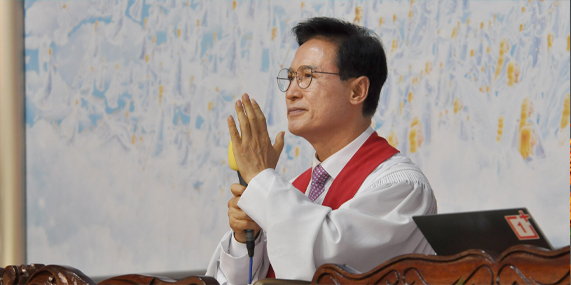
Joy as the Barometer of Faith
Bible passage: John 2:1-11, 5:22-23
“7. Jesus said to the servants, "Fill the jars with water"; so they filled them to the brim. 8. Then he told them, "Now draw some out and take it to the master of the banquet." They did so, 9. and the master of the banquet tasted the water that had been turned into wine. He did not realize where it had come from, though the servants who had drawn the water knew. Then he called the bridegroom aside 10. and said, "Everyone brings out the choice wine first and then the cheaper wine after the guests have had too much to drink; but you have saved the best till now.”
In the world, where there is something real, there is also something fake. The more valuable something is, the more prevalent its counterfeits become.
Joy is no exception. Joy is such an important virtue that it can be considered a hallmark of Christians. Joy serves as a measure of whether a Christian is living a proper life of faith. Those who live a dull spiritual life become anxious and fearful when difficulties arise. Such joy is not true joy. The Holy Spirit desires to give us true joy, but Satan tempts us daily with counterfeit joy. We call this counterfeit joy “worldly pleasure.” The scripture is set against the backdrop of a wedding feast, which should be the happiest and most joyous of occasions.
However, at this feast, where joy should have been overflowing, a very embarrassing situation arose. In verse 3, it says, "The wine ran out." How distressing is this statement? At this wedding feast, which faced such an awkward situation, Jesus turned water into wine so fragrant that the celebration overflowed with even greater joy. Though this may seem like a simple, accidental event on the surface, verse 11 assigns significant meaning to it: It says, "What Jesus did here in Cana of Galilee was the first of the signs through which He revealed His glory; and His disciples believed in Him." In this first sign, the word used is "semeion," which originates from "sema," meaning "announcement" or "foreshadowing."
The Bible tells us that the event of turning water into wine was a "semeion sema," a preview of the work Jesus would do when He comes to earth in the future. The reason Jesus changed water into wine at the wedding feast is to transform the rampant worldly pleasures of the last days into the joy that the Lord gives. Why does our era fail to experience true joy? Our society has become one obsessed with the pursuit of pleasure, including various addictions. In the Bible, wine symbolizes joy. Ecclesiastes 9:7 which says, "Go, eat your food with gladness, and drink your wine with a joyful heart, for God has already approved what you do," describes eating with joy, with wine being the representative example. Are you joyful? We must restore the joy that God gives. As Christians, we must examine whether we possess the joy that the world cannot give because the Holy Spirit dwells within us. Saying, "I am filled with the Holy Spirit, but I am not joyful," is contradictory. The fruit of the Spirit is joy, and if you say, "I am not very joyful," it means the fruit of the Spirit has rotted and fallen off.
1. The world offers pleasure, but the Lord gives joy, the essence of happiness. When the essence is restored, the circumstances are also restored. Why did Jesus perform His first miracle by turning water into wine? The people who came to the wedding to enjoy the feast symbolize the people of the world who seek pleasure. However, the wine made by people to bring them enjoyment ran out. The people who came to enjoy themselves lost their fun. 2 There will be a day when the worldly pleasures, symbolized by the wine of the world, run out, leading to despair. However, the wine Jesus made brought overflowing satisfaction and joy. Jesus performed His first miracle of turning water into wine to show people not to pursue worldly pleasures but to seek the joy given by God. The genuine joy, which is the fruit of the Holy Spirit, and the worldly pleasure, which is the fruit of the world, are always laid out before us. An interesting scene in Ecclesiastes shows King Solomon testing which of these two is the true joy we should seek. Ecclesiastes 2:1 says, “I said to myself, “Come now, I will test you with pleasure to find out what is good.”
But that also proved to be meaningless.” King Solomon is talking to himself: "I said to myself, ‘Come now, I will test you with pleasure to find out what is good.’ But that also proved to be meaningless.” Because Solomon was an absolute ruler, he could do this. He conducted two experiments. The first was to see if he could find joy by pursuing physical pleasure. Ecclesiastes 2:3 says, "I tried cheering myself with wine, and embracing folly - my mind still guiding me with wisdom. I wanted to see what was good for people to do under the heavens during the few days of their lives." So, he held grand parties, drank wine, indulged in feasting, sought pleasure, and entertained women. After trying all these, what was his conclusion? At the end of verse 1, it says, "This too was meaningless." It was not true joy. Then, he conducted a second test: "Can one find true joy through a sense of achievement in work and success in the world?" Ecclesiastes 2:4-6, 9-10 says as follows: 3 [4] I undertook great projects: I built houses for myself and planted vineyards. [5] I made gardens and parks and planted all kinds of fruit trees in them. [6] I made reservoirs to water groves of flourishing trees. [9] I became greater by far than anyone in Jerusalem before me. In all this my wisdom stayed with me. [10] I denied myself nothing my eyes desired; I refused my heart no pleasure.
My heart took delight in all my labor, and this was the reward for all my toil. This encompasses the desires of most people today - wanting a bigger house, more money in the bank, expanding businesses, and being acknowledged as successful, for which they toil and labor. Can the sense of achievement from work and worldly success bring joy? What was the conclusion? Ecclesiastes 2:11 says, "Yet when I surveyed all that my hands had done and what I had toiled to achieve, everything was meaningless, a chasing after the wind; nothing was gained under the sun." The phrase "afterwards" implies that the tests were conducted over many years. The Bible is a great guide of wisdom. Our forefathers have lived, tested, and tried all of it. But because we don’t know this, we continue to struggle in vain. Despite being an absolute ruler, Solomon found that pursuing bodily pleasures in search of joy was utterly meaningless, and that even expanding his house and business ventures left him empty. Many people describe today’s world as one overflowing with pleasure but lacking true joy.
This issue is addressed in a book by Jewish social psychologist Erich Fromm called "To Have or To Be." 4 The author distinguishes between joy and pleasure, stating that while they seem similar, they are entirely different. People live in pleasures devoid of joy. When it comes to joy, there are two before us: one is the genuine joy given by the Holy Spirit, and the other is the fake joy, which is worldly pleasure. Pleasure derived from social success, wealth, sexual pleasure, indulgence, winning competitions, drugs, and hallucinogenic states - all these are defined as pleasures. He argues that the pursuit of pleasure drives people toward increasingly stimulating worlds of pleasure because "a life devoid of joy drives people to seek new and more stimulating pleasures." Our generation has lost true joy today. As a result, people waste their lives chasing substitutes for joy, such as sex, gaming addiction, alcohol, pornography, drugs, and so on. This is a world intoxicated with fake joy, wasting life on substitutes for joy.
Are you living a life pursuing joy or one chasing after pleasure? When comparing the genuine joy of the Holy Spirit and the fake pleasure the world offers, we can think of it in terms of eating food. During regular hospital checkups, doctors emphasize exercise, avoiding overwork, and controlling diet. As I get older, I find myself exercising less and unable to control my eating, causing my belly to expand. So, I tried skipping my usual breakfast and replacing it with simple options like milk or fruit. But my belly continued to grow. A pastor well-versed in this area mentioned that excessive intake of sweet things could cause this. I used to enjoy sweet coffee with a lot of sugar, but since then, I have stopped drinking it. 5 The reason is that the criterion for choosing food has changed from how tasty it is to whether it is good or bad for my health. After learning that consuming a lot of sugar is harmful, I now drink only unsweetened "Americano" coffee and avoid snacks or ice cream. When choosing food, the criteria are not how delicious or bland it is, but how beneficial or harmful it is to my body.
Similarly, in our lives, instead of living by the standards of how enjoyable, pleasurable, or stimulating something is, we should consider whether it is righteous in the sight of God, beneficial to our souls, and helpful to our faith. Thus, living a good spiritual life means changing our criteria for making choices. In the past, regardless of whether our souls were ruined, we pursued only what was pleasurable, joyful, enjoyable, and comfortable for us. But now, the criteria should be whether something is beneficial or harmful to our souls. In Acts Chapter 3, in front of the temple gate, a lame man was begging. What did he want? A coin. He was asking for money to buy a meal because he was hungry. But Peter didn’t give him a coin; he gave him the name of Jesus. It didn’t solve the superficial problem but provided a fundamental solution. When the essence is restored, the circumstances are also restored. Giving a coin might solve his hunger for one meal, but in three or four hours, he would be hungry again.
In such a case, whether he received the coin or not makes no difference. He would be hungry again and have to beg again. However, when the power of Jesus Christ of Nazareth, the essence, came upon him, the fundamental problem was solved. He walked, jumped, and praised the Lord, and his joy was restored. 6 Today, we come to church not to seek a coin but to seek the essence, the power in the name of Jesus Christ. I hope that, instead of being spiritually lame who come seeking a coin, there will be events where your souls are saved, you walk, jump, and praise God.
2. Joy is a fruit of faith that we must actively strive to achieve. At the wedding feast, those who pursued worldly pleasures to the point of drinking all the wine would have been dismayed and disappointed when the wine ran out. However, in this situation, Mary did not just sit in despair and disappointment at the loss of the wine, a symbol of worldly pleasure. Instead, she actively approached Jesus with faith, seeking to taste the true joy of the wine that Jesus would provide. Though Jesus said in verse 4, “Woman, why do you involve Me? My hour has not yet come”, Mary responded with a proactive attitude to taste true joy by saying to the servants in verse 5: “Do whatever he tells you.” The feast, which would have ended in mere pleasure after consuming the worldly wine, became a celebration of true joy with the wine made by Jesus, thanks to Mary’s proactive approach. There is a book called "Champagne for the Soul." The author, Mike Mason, introduces himself in the book as follows: "I have lived almost my entire life as a person on the borderline of anxious depression, hypersensitive and nervous." The author was born with a dark personality. Due to his gloomy and depressive nature, he even struggled with alcoholism in his late twenties. But one day, he conducted an intriguing experiment. He declared, “I will rejoice in the Lord for the next 90 days.” 7 He decided to live 90 days rejoicing in the Lord, overcoming his naturally dark and depressive temperament, difficult circumstances, and many upcoming troubles. The experiment was to see if this was really possible. He recorded his experiences of living joyfully, almost like writing a journal for 90 days, and examined whether a life of joy was achievable.
This is the basis of the book "Champagne for the Soul." In the book, the author states that after deciding to be joyful and conducting the experiment for 90 days, he found that joy actually started to flow into his life. Moreover, this joy did not leave him and continued to operate within his inner being. Amazingly, his depression was cured. The joy given by the Holy Spirit is not a joy that comes from lying around waiting for a fruit to fall from a tree; it is a joy that is obtained through striving, making efforts to overcome one’s circumstances, and working hard to overcome one’s emotions. It is a joy experienced through the work of the Holy Spirit amidst such efforts, a joy given by God. Psalm Chapter 57 was written by David when he was running away from the evil King Saul, who sought to kill him. In his urgency, he hid in a dark cave. Though he escaped into a dark cave, how anxious and chaotic must David's heart have been? In Psalm 57:6, he expresses his frustration by saying, “They spread a net for my feet - I was bowed down in distress. They dug a pit in my path - but they have fallen into it themselves.” For most people, in such a situation of frustration and despair, they might be filled with resentment and even feel like committing suicide due to depression.
However, David says, “I was bowed down in distress,” and in the very next verse, verse 7, he says, “My heart, O God, is steadfast, my heart is steadfast; I will sing and make music.” Even though King Saul is trying to kill him and he feels like he might fall into depression, David proclaims that he will not collapse. He declares, "I will rise and praise God instead of being sorrowful." What a profound confession! There are two types of people in this world: One group says, “I am so frustrated, angry, there are too many enemies, and things are not going well,” and they live trapped in dark pits and nets, tormenting themselves every day.
The other group, like David, "pushes away the nets and climbs out of the pit." “My heart is steadfast; my heart is steadfast.” Why does he say it twice? Emotions do not change just by making a decision once. Therefore, one confesses until their heart is steadfast and steadfast again. By repeatedly confessing that his heart is steadfast so that his emotions are not bound by depression and resentment, David ultimately achieves the joy that God gives. The joy that God provides is not like lying under a persimmon tree waiting for the fruit to fall; rather, it is like climbing up the tree to pick the fruit of joy actively. When our hearts are downcast, when we are surrounded by enemies, we must not fall into despair. We must strive until we break free from those emotions and our hearts are filled with the joy of the Holy Spirit. There is a Korean folk tale I remember reading as a child that left a deep impression on me. It depicts how, in times of failure and hardship, people can gain great joy through wisdom and courage. 9 The title is “The Three-Year Hill.” In the olden days, there lived an old woodcutter and his wife.
To get to the marketplace from their home, they had to cross a hill. However, there was a story that if you fell while crossing this hill, you would die within three years, which is why it was called the “Three-Year Hill.” One day, as the old man was carefully crossing the hill, a rabbit suddenly jumped out, startling him, and he fell. Eventually, he returned home and lamented to his wife, "I only have three years left to live!" and ended up bedridden. As three years were drawing to an end, their young grandson asked his grandfather why he was about to die. After hearing the whole story, the grandson said, "Then if you fall again, you will live for another three years. And if you fall again, you will live for another six years, right?" Upon hearing this, the old man got up, went to the Three-Year Hill, and fell down ten more times, supposedly living another thirty years. Thus, the “Three-Year Hill” became known as the “Longevity Hill.” Despite being destined to die after a single mistake, he did not succumb to the groundless story that was circulating. Instead, with a proactive attitude, he faced his fate and seized the joy of life. This is both interesting and admirable. In the main scripture, we also see the proactive attitude of the servants who drive away sorrow and seize joy. When Jesus told the servants to “fill the jars with water,” He didn’t specify that they should fill them to the brim, but the servants did so proactively, filling them to the brim. Verse 7 says, “Jesus said to the servants, “Fill the jars with water”; so they filled them to the brim.”
Jesus is saying, "Do not say there is no wine; fill the empty jars. Strive and work hard. Challenge yourself, and I will help with the rest. Make efforts in the physical, advance in faith, and I will handle the spiritual creation." If the servants had poured water only once and said, "We are too tired to do more," would the water have turned into wine? No. Because they filled the jars to the brim, the water turned into wine. In Joshua Chapter 6, there is a scene where the walls of Jericho fall. God commanded them to march around the city once every day and seven times on the last day. But if they said, “No, we don’t want to. It’s tiring. We will only do six rounds,” would the walls of Jericho have fallen?
No, they wouldn’t. How many times does God say, “Rejoice always, pray continually, give thanks in all circumstances, repent, love one another, circumcise your hearts, be faithful”? Yet, many people say, “No, I won’t do it. It’s too hard.” We need to be like the servants who filled the jars to the brim with water. If we are people who only pour water a few times and say, "I'm too tired to do more," how can we taste the great joy of the water turning into wine? In the book “Champagne for the Soul” mentioned earlier, the author makes another point. Because it is based on what he learned in the field of life for 90 days, not from theory, it offers many insights. He says, "Joy is like breathing." Imagine hiking in a place with fresh air. The air is so clean and good, full of oxygen, that you don’t want to exhale. 11 If you keep only inhaling, your chest would explode, and you would die. Just as you must exhale after inhaling, to keep inhaling more fresh air, joy works the same way.
Let me read the author’s words directly: “Joy is like breathing. Inhaling alone is not enough. You must also exhale. Simply put, rejoice. Spread your joy. Hug someone, dance, speak words of encouragement. Write letters or books. Don’t just think about happiness; live happily. Joy desires to be expressed, realized, and lived out.” Such a beautiful expression! Your joy desires to be expressed in life, realized in life, and made a lifestyle. Today, we can find the reason why we haven’t fully enjoyed joy. It’s because we only inhale and don’t exhale. If you inhale, you must also exhale. Express that joy. Share it with those around you. Rejoice, be glad, spread happiness, hug someone, dance with joy, and speak encouraging words. When these things keep intersecting, the joy within us amplifies. Now, let’s practice what we have learned. Pair up with someone next to you. Proclaim your joy to them. Show it. Let them hear it. But this isn’t how it should be. We aren’t trained or accustomed to this, so it doesn’t come naturally.
Some people, when told to express their joy, just blow "Phew~" to the person next to them. If you feel awkward because someone unfamiliar is sitting next to you, go home and freely express the joy you have inhaled to your family. Express joy, buy small gifts, laugh, be happy, and share joy with those around you. When you do this, the joy within us amplifies.
3. Restoration of Worship is the Key Path to Restoring Joy. To truly restore the genuine joy that God gives in reality, we must strive to restore worship. The essential components of worship include five elements: the Word, prayer, praise, offerings, and fellowship. Therefore, when we talk about restoring worship, it specifically means restoring the Word, restoring prayer, restoring praise, restoring offerings, and restoring fellowship. In the main scripture, Jesus' mother, Mary, and the servants represent those who have fully restored their worship, thereby receiving the overflowing blessing of joy. In verse 5, Mary embodies the spirit of worship through obedience by saying, “Do whatever He tells you.” Likewise, as stated in verse 9, which says, “and the master of the banquet tasted the water that had been turned into wine. He did not realize where it had come from, though the servants who had drawn the water knew,” the servants recognized and believed that the transformation of water into wine was a miracle performed by Jesus' power.
In today's terms, we could describe this as worshiping in spirit and truth. In Greek, the word for joy is "kara," which shares the same root as "charis," meaning grace. Since the root words for grace and joy are the same, to "receive grace" means that the joy of the Lord has been transferred into us; it means that the Lord's joy has entered into us. 13 Through worship, we must feel and experience the Lord's joy being transferred and coming into us. A worker in a Korean church shared this testimony: During a very difficult time, he suffered from depression, but by God’s grace, he was healed and testified as follows: “After experiencing the grace of healing from depression last January, the immediate response was the restoration of worshipful awe. Until then, I thought I was diligently participating in worship.
However, after experiencing transformation and recovery in every aspect, I re- examined my attitude in all areas before God.” He shared that during worship, he prayed and worshiped with all his heart and life: He said, “God, I will worship with all my life and everything I have. Through this worship, let me deeply feel with my whole being that my healing is indeed real.” Although he was a church worker, serving in various capacities and thinking he was worshiping well, he wanted to confirm through worship that his depression was truly healed by the grace of the Holy Spirit. He staked his life on worship, worshiped with all his strength, and devotedly participated in every part of the worship without neglecting any detail. He said, “As I began to worship with this changed attitude, I felt a transformation within my spirit. From deep within my heart, peace, vitality, and joy that I had never experienced before began to arise. It felt as if peace and joy completely enveloped my body. I previously mistook being sufficiently happy for true joy. However, along with the restoration of worship, I rediscovered what true joy really is.
It feels like I have found a forgotten treasure.” This is what worship is. Some of you may come late to worship and leave before it ends, perhaps feeling satisfied, but that is not worship. Worship is immersion. It is going all in. From Saturday, focus your heart on Sunday worship. Spend Sunday morning solely focused on worship. The prayer meeting starting at 8 a.m. on Sunday morning is very helpful for wholeheartedly offering the main worship service. Experiment with this, not temporarily but until you experience true joy. Will you decide on 90 days or 9 months? Worship is what gives us life. In 1 Kings Chapter 3, King Solomon offered a thousand burnt offerings, and that night God appeared in a dream and asked, “What shall I give you?” God not only blessed Solomon with wisdom but also with riches and honor that he had not asked for. The burnt offerings are like today’s Sunday worship.
While one ox would suffice for a burnt offering, Solomon offered 1,000 all at once. Solomon worshiped with 1,000 times the sacrifice, with all his heart, mind, and devotion, unlike ordinary people. Let us also worship like King Solomon - not necessarily 1,000 times, but with 10 or 100 times the devotion, passion, and full concentration. Then, tonight, God may appear in a dream, asking, "What shall I give you?" and He will respond and bless you. In English, JOY means happiness. There is an acrostic that explains this. If you give me the prompts J, O, Y, I will elaborate. Please prompt me with J. 15 J stands for Jesus. Next, O. O stands for overflow. Finally, Y. Y stands for you. So, if we live with joy rather than pleasure, Jesus will cause you to overflow. David said in Psalm 23:5, "You prepare a table before me in the presence of my enemies. You anoint my head with oil; my cup overflows," saying, “My cup overflows.”
Even when Saul, the absolute ruler, came after him to kill him, and even when his son, blinded by power, pointed a sword at his father’s neck, David always declared, "My cup overflows; I lack nothing," because the LORD continually poured joy into his heart. This was possible because David possessed the true joy that God gives. Conclusion: The wine of pleasure made by humans does not last to the end; it inevitably falls short and brings disappointment. One might suddenly fall ill when in good health, experiencing the misfortune of running out of wine when everything seemed to be going well. A situation could arise where one has to resign from a secure job, experiencing the misfortune of running out of wine, leading to difficulties in life. Unexpected emergencies may occur, leaving one at a loss about how to respond, experiencing a life where the wine runs out. In such times, like Mary and the servants, we must come before the Lord in worship. When we are filled with the true joy of God's wine, which the Lord provides, our lives become more valuable and beautiful as time goes on. To summarize today's message: happiness.
First, while the world offers pleasure, the Lord gives the joy that is the essence of 16 Therefore, we must seek the essence of life, find true joy, and as the essence is restored, let our surrounding circumstances also be restored.
Second, know that joy, the essence of life, is a fruit of faith that we must actively strive to achieve. Rather than living a life where the fruit dries up and falls off, may we pursue a life that, with a progressive attitude of faith, bears the abundant fruit of joy.
Third, in situations where we face disappointment due to a lack of wine, may all of you restore true joy through the restoration of worship—through the restoration of the Word, praise, prayer, offerings, and fellowship, in the name of our Lord Jesus Christ, I bless you all. - END -
Furaha ni Kipimo cha Imani
Andiko la Biblia: Yohana 2:1–11; 5:22–23
“7. Yesu akawaambia, Jalizeni maji mitungi. Wakaijaza hata juu. 8. Akawaambia, Sasa tekeni, mkampelekee mkuu wa meza. 9. Mkuu wa meza alipoonja maji yaliyogeuzwa kuwa divai, hakujua yalipotoka.”
Katika ulimwengu, mahali ambapo kuna kitu halisi, pia kuna kitu bandia. Kadiri kitu kinavyokuwa na thamani kubwa, ndivyo vitu vinavyokifananisha kwa udanganyifu vinavyozidi kuongezeka.
Furaha pia iko hivyo. Furaha ni sifa muhimu sana kiasi kwamba inaweza kuitwa alama ya Wakristo. Furaha ni kipimo kinachoonyesha kama Mkristo anaishi maisha ya imani yaliyo sahihi. Watu wanaoishi maisha ya kiroho yasiyo na uchangamfu huwa na wasiwasi na hofu matatizo yanapotokea. Furaha ya namna hiyo si furaha ya kweli. Roho Mtakatifu anataka kutupa furaha ya kweli, lakini Shetani hutujaribu kila siku kwa furaha bandia. Tunaiita furaha hiyo bandia “raha za dunia.” Andiko hili limetokea kwenye arusi, ambayo inapaswa kuwa mojawapo ya hafla zenye furaha na shangwe nyingi zaidi.
Hata hivyo, kwenye arusi hiyo ambamo furaha ilipaswa kufurika, kulitokea hali ya aibu sana. Mstari wa 3 unasema: “Divai imeisha.” Kauli hiyo inasikitisha kama nini! Kwenye arusi hiyo iliyokumbwa na hali hiyo ya kuaibisha, Yesu aligeuza maji kuwa divai yenye harufu nzuri, na sherehe ikajaa furaha kubwa zaidi. Kwa juu juu, tukio hili linaweza kuonekana kuwa jambo dogo lililotokea tu, lakini mstari wa 11 unalipa maana kubwa: “Yesu alifanya ishara hii ya kwanza huko Kana ya Galilaya, akaudhihirisha utukufu wake; nao wanafunzi wake wakamwamini.” Katika ishara hii ya kwanza, neno lililotumiwa ni “semeion,” linalotokana na “sema,” linalomaanisha “tangazo” au “ishara ya jambo litakalotokea.”
Biblia inatuambia kwamba kugeuzwa kwa maji kuwa divai kulikuwa “semeion sema,” yaani ishara ya awali ya kazi ambayo Yesu angeifanya baadaye atakapokuja duniani. Yesu aligeuza maji kuwa divai kwenye arusi ili kubadili raha za dunia zilizoenea katika siku za mwisho na kuleta furaha itokayo kwa Bwana. Kwa nini kizazi chetu hakipati furaha ya kweli? Jamii yetu imejishughulisha sana na kutafuta raha, zikiwemo aina mbalimbali za uraibu. Katika Biblia divai huwakilisha furaha. Mhubiri 9:7 inasema: “Enenda zako, ule chakula chako kwa furaha, unywe divai yako kwa moyo wa kuchangamka; kwa maana Mungu amezikubali kazi zako.” Hapa kula kwa furaha kunaelezwa kwa kutumia divai kama mfano. Je, una furaha? Tunapaswa kurejesha furaha anayotupa Mungu. Sisi Wakristo tunapaswa kuchunguza kama tunayo furaha ambayo dunia haiwezi kutupa, kwa kuwa Roho Mtakatifu anakaa ndani yetu. Kusema, “Nimejazwa Roho Mtakatifu, lakini sina furaha,” ni kujipinga. Tunda la Roho ni furaha; ukisema, “Sina furaha sana,” inamaanisha tunda hilo limeoza na kudondoka.
1. Dunia hutoa raha, lakini Bwana hutoa furaha, kiini cha maisha yenye furaha. Kiini kinaporejeshwa, hali pia hurejeshwa. Kwa nini Yesu alifanya muujiza wake wa kwanza kwa kugeuza maji kuwa divai? Watu waliokuja arusini kufurahia karamu wanawakilisha watu wa dunia wanaotafuta raha. Lakini divai iliyotengenezwa na watu ili kuwafurahisha iliisha. Watu waliokuja kujifurahisha wakapoteza furaha yao. Itafika siku ambapo raha za dunia, zinazowakilishwa na divai ya dunia, zitaisha na kuleta kukata tamaa. Hata hivyo, divai aliyoitengeneza Yesu ilileta uradhi na furaha iliyofurika. Yesu alifanya muujiza wake wa kwanza wa kugeuza maji kuwa divai ili kuwaonyesha watu wasitafute raha za dunia bali furaha anayoitoa Mungu. Furaha ya kweli, tunda la Roho Mtakatifu, na raha za dunia, tunda la dunia, daima viko mbele yetu. Kisa cha kuvutia katika Mhubiri kinaonyesha Mfalme Sulemani akijaribu kujua kati ya mambo hayo mawili ni lipi furaha ya kweli tunayopaswa kuitafuta. Mhubiri 2:1 inasema: “Nikajisemea moyoni mwangu, Haya basi, nitakujaribu kwa furaha; basi ujifurahie mema.”
Lakini hata hilo lilionekana kuwa ubatili. Mfalme Sulemani anajisemea: “Nikajisemea moyoni mwangu, Haya basi, nitakujaribu kwa furaha; basi ujifurahie mema. Lakini tazama, hilo nalo lilikuwa ubatili.” Kwa kuwa Sulemani alikuwa mtawala mkuu, aliweza kufanya hivyo. Alifanya majaribio mawili. La kwanza lilikuwa kuchunguza kama angepata furaha kwa kutafuta raha za mwili. Mhubiri 2:3 inasema: “Nikatafuta moyoni mwangu jinsi ya kuupa mwili wangu raha kwa divai, moyo wangu ukiniongoza kwa hekima; na jinsi ya kuushika upumbavu, hata nione lililo jema kwa wanadamu kufanya chini ya mbingu siku zote za maisha yao.” Kwa hiyo alifanya karamu kubwa, akanywa divai, akajifurahisha kwa karamu na anasa, akatafuta raha na kujifurahisha na wanawake. Baada ya kujaribu yote hayo, hitimisho lake lilikuwa nini? Mwisho wa mstari wa 1 unasema: “Huko nako ni ubatili.” Haikuwa furaha ya kweli. Kisha akafanya jaribio la pili: “Je, mtu anaweza kupata furaha ya kweli kupitia mafanikio ya kazi na mafanikio ya kidunia?” Mhubiri 2:4–6, 9–10 inasema: “[4] Nilijifanyia kazi kubwa; nilijijengea nyumba; nilijipandia mizabibu; [5] nilijifanyia bustani na viunga, nikapanda ndani yake miti ya matunda ya kila namna; [6] nilijifanyia mabwawa ya maji, ya kumwagilia msitu uliomea miti; [9] Basi nikawa mkuu, na kuongezeka zaidi ya wote walionitangulia katika Yerusalemu; tena hekima yangu ikakaa nami; [10] wala sikuyanyima macho yangu chochote nilichotamani, wala sikuuacha moyo wangu kufurahia raha yoyote.”
Moyo wangu ukafurahi kwa sababu ya kazi yangu yote, nayo ndiyo iliyokuwa thawabu ya taabu yangu yote. Haya yanajumuisha mambo ambayo watu wengi wa leo huyatamani: nyumba kubwa zaidi, fedha nyingi zaidi benki, biashara zinazopanuka na kutambuliwa kuwa wamefanikiwa; kwa ajili ya mambo hayo hufanya kazi na kujitaabisha. Je, mafanikio ya kazi na mafanikio ya kidunia yanaweza kuleta furaha? Hitimisho lilikuwa nini? Mhubiri 2:11 inasema: “Kisha nikaziangalia kazi zote zilizofanywa na mikono yangu, na taabu niliyotaabika katika kuzifanya; na tazama, yote yalikuwa ubatili na kujilisha upepo, wala hakuna faida chini ya jua.” Neno “baadaye” linaonyesha kwamba majaribio hayo yalifanywa kwa miaka mingi. Biblia ni mwongozo mkuu wa hekima. Mababu zetu waliishi, wakayajaribu na kuyapitia mambo haya yote. Lakini kwa sababu hatujui hilo, tunaendelea kujitaabisha bure. Ingawa alikuwa mtawala mkuu, Sulemani aligundua kwamba kutafuta furaha kupitia raha za mwili hakukuwa na maana kabisa, na hata kupanua nyumba na biashara kulimwacha akiwa mtupu. Watu wengi hueleza ulimwengu wa leo kuwa umejaa raha lakini hauna furaha ya kweli.
Mwanasaikolojia wa kijamii Myahudi Erich Fromm anajadili jambo hili katika kitabu chake “To Have or To Be.” Anatofautisha furaha na raha, akisema kwamba ingawa vinaonekana kufanana, ni vitu tofauti kabisa. Watu huishi katika raha zisizo na furaha. Kuna aina mbili za furaha mbele yetu: furaha ya kweli itokayo kwa Roho Mtakatifu, na furaha bandia, yaani raha za dunia. Raha zitokanazo na mafanikio ya kijamii, mali, ngono, anasa, kushinda mashindano, dawa za kulevya na hali za kuona au kuhisi mambo yasiyokuwapo, yote haya huitwa raha. Anasema kwamba kutafuta raha huwasukuma watu kuelekea raha zinazosisimua zaidi na zaidi, kwa sababu “maisha yasiyo na furaha huwafanya watu watafute raha mpya na zenye kusisimua zaidi.” Kizazi chetu kimepoteza furaha ya kweli. Kwa hiyo, watu hupoteza maisha yao wakitafuta vitu vya kuchukua nafasi ya furaha, kama ngono, uraibu wa michezo ya kompyuta, pombe, ponografia na dawa za kulevya. Huu ni ulimwengu uliolewa na furaha bandia, ukipoteza maisha kwa vitu vinavyochukua nafasi ya furaha ya kweli.
Je, unaishi maisha ya kutafuta furaha au ya kufuatilia raha? Tunapolinganisha furaha ya kweli ya Roho Mtakatifu na raha bandia inayotolewa na dunia, tunaweza kufikiria kuhusu chakula. Wakati wa uchunguzi wa kawaida hospitalini, madaktari husisitiza mazoezi, kuepuka kufanya kazi kupita kiasi na kudhibiti chakula. Kadiri ninavyozeeka, nafanya mazoezi kidogo na ninashindwa kudhibiti kiasi cha chakula ninachokula, hivyo tumbo langu linaongezeka. Nilijaribu kuacha kifungua kinywa changu cha kawaida na badala yake kunywa maziwa au kula tunda. Lakini tumbo liliendelea kuongezeka. Mchungaji mwenye ujuzi katika jambo hili alisema kwamba kula vitu vitamu kupita kiasi kunaweza kusababisha hilo. Nilikuwa napenda kahawa tamu yenye sukari nyingi, lakini tangu wakati huo nimeacha kuinywa. Sababu ni kwamba kigezo changu cha kuchagua chakula kimebadilika: sasa siangalii tu kama kina ladha nzuri, bali kama ni kizuri au kibaya kwa afya yangu. Baada ya kujua kwamba kutumia sukari nyingi ni hatari, sasa ninakunywa kahawa ya “Americano” isiyo na sukari tu na kuepuka vitafunio na aiskrimu. Ninapochagua chakula, kigezo si kama kina ladha nzuri au hakina ladha, bali kama kina manufaa au madhara kwa mwili wangu.
Vivyo hivyo katika maisha yetu, badala ya kufuata viwango vya kuamua jambo kwa jinsi linavyofurahisha, kuleta raha au kusisimua, tunapaswa kujiuliza kama ni la haki mbele za Mungu, lina manufaa kwa roho zetu na linatusaidia katika imani. Kwa hiyo, kuishi maisha mazuri ya kiroho kunamaanisha kubadili vigezo vya kufanya maamuzi. Zamani tulitafuta tu mambo yaliyotupa raha, furaha, starehe na faraja, bila kujali kama roho zetu ziliharibika. Sasa kigezo kinapaswa kuwa kama jambo lina manufaa au madhara kwa roho zetu. Katika Matendo sura ya 3, mbele ya lango la hekalu, kulikuwa na mtu aliyekuwa kilema akiomba sadaka. Alitaka nini? Sarafu. Aliomba fedha za kununua chakula kwa sababu alikuwa na njaa. Lakini Petro hakumpa sarafu; alimpa jina la Yesu. Hilo halikutatua tatizo lake la juu juu tu, bali lilimpa suluhisho la msingi. Kiini kinaporejeshwa, hali pia hurejeshwa. Kumpa sarafu kungeweza kutuliza njaa yake kwa mlo mmoja, lakini baada ya saa tatu au nne angekuwa na njaa tena.
Katika hali hiyo, kama angepokea sarafu au la, tofauti isingekuwa kubwa. Angekuwa na njaa tena na kulazimika kuomba sadaka tena. Lakini nguvu ya Yesu Kristo wa Nazareti, ambaye ndiye kiini, ilipomjia, tatizo la msingi lilitatuliwa. Alitembea, akaruka na kumsifu Bwana, na furaha yake ikarejeshwa. Leo tunakuja kanisani si kutafuta sarafu, bali kutafuta kiini, yaani nguvu iliyo katika jina la Yesu Kristo. Natumaini kwamba badala ya kuwa watu walio kilema kiroho wanaokuja kutafuta sarafu, kutakuwa na matukio ambamo roho zenu zinaokolewa, mnatembea, mnaruka na kumsifu Mungu.
2. Furaha ni tunda la imani ambalo tunapaswa kujitahidi kulipata. Kwenye arusi, wale waliotafuta raha za dunia hadi divai yote ikaisha wangekata tamaa na kuvunjika moyo divai ilipoisha. Lakini katika hali hiyo, Mariamu hakuketi tu akiwa amekata tamaa kwa kukosa divai, ishara ya raha za dunia. Badala yake, alimwendea Yesu kwa imani ili apate kuonja furaha ya kweli ya divai ambayo Yesu angetoa. Ingawa Yesu alisema katika mstari wa 4: “Mama, nina nini nawe? Saa yangu haijawadia,” Mariamu alijibu kwa mtazamo wa kuchukua hatua ili kuonja furaha ya kweli, akawaambia watumishi katika mstari wa 5: “Lo lote atakalowaambia, fanyeni.” Shukrani kwa hatua ya Mariamu ya imani, karamu ambayo ingeishia kuwa raha tu baada ya kunywa divai ya dunia ikawa sherehe ya furaha ya kweli kwa divai iliyotengenezwa na Yesu. Kuna kitabu kinachoitwa “Champagne for the Soul.” Mwandishi wake, Mike Mason, anajieleza hivi: “Nimeishi karibu maisha yangu yote nikiwa mtu aliye karibu na msongo wa mawazo wenye wasiwasi, mwenye hisia kali na mwenye woga.” Alizaliwa akiwa na tabia ya huzuni. Kwa sababu ya hali yake ya giza na mfadhaiko, alipambana hata na uraibu wa pombe alipokuwa na miaka ya mwisho ya ishirini. Lakini siku moja alifanya jaribio la kuvutia. Alitangaza: “Nitafurahi katika Bwana kwa siku 90 zijazo.” Aliamua kuishi siku 90 akifurahi katika Bwana, na kushinda tabia yake ya asili ya huzuni na mfadhaiko, hali ngumu na matatizo mengi yaliyokuwa mbele yake. Jaribio lilikuwa kuchunguza kama jambo hilo lingewezekana kweli. Aliandika aliyoyapitia alipokuwa akiishi kwa furaha, karibu kama kuandika shajara kwa siku 90, na akachunguza kama maisha ya furaha yanawezekana.
Hiki ndicho kiini cha kitabu “Champagne for the Soul.” Mwandishi anasema kwamba baada ya kuamua kuwa na furaha na kufanya jaribio hilo kwa siku 90, furaha ilianza kutiririka kweli maishani mwake. Zaidi ya hayo, furaha hiyo haikumwacha, bali iliendelea kufanya kazi ndani kabisa yake. Kwa kushangaza, mfadhaiko wake ulipona. Furaha itokayo kwa Roho Mtakatifu si furaha ya kulala tu na kusubiri tunda lianguke kutoka mtini; ni furaha inayopatikana kwa kujitahidi, kufanya bidii ya kushinda hali zako na kufanya kazi kwa bidii ili kushinda hisia zako. Ni furaha inayopatikana Roho Mtakatifu anapotenda kazi katikati ya juhudi hizo; furaha anayoitoa Mungu. Zaburi ya 57 iliandikwa na Daudi alipokuwa akimkimbia Mfalme Sauli mwovu aliyetaka kumuua. Katika hali yake ya hatari alijificha pangoni lenye giza. Ingawa alikuwa amekimbilia pangoni lenye giza, moyo wa Daudi lazima ulikuwa na wasiwasi na machafuko kiasi gani? Katika Zaburi 57:6 anaeleza kufadhaika kwake: “Wametega wavu kwa miguu yangu; nafsi yangu imeinama; wamenichimbia shimo mbele yangu, wameanguka wenyewe ndani yake.” Watu wengi wakiwa katika hali hiyo ya kufadhaika na kukata tamaa wangejazwa na kinyongo, au hata kufikiria kujiua kwa sababu ya mfadhaiko.
Hata hivyo, Daudi anasema: “Nafsi yangu imeinama,” na katika mstari unaofuata, mstari wa 7, anasema: “Moyo wangu u thabiti, Ee Mungu, moyo wangu u thabiti; nitaimba, naam, nitaimba zaburi.” Ingawa Mfalme Sauli anajaribu kumuua na anaweza kuhisi kwamba anakaribia kuingia katika mfadhaiko, Daudi anatangaza kwamba hataanguka. Anasema: “Badala ya kuhuzunika, nitainuka na kumsifu Mungu.” Ni ungamo la kina kama nini! Kuna aina mbili za watu duniani. Kundi moja husema: “Nimefadhaika na kukasirika sana; nina maadui wengi mno, na mambo hayaendi vizuri,” kisha huishi limekwama katika mashimo na nyavu za giza, likijitesa kila siku.
Kundi jingine, kama Daudi, “husukuma nyavu kando na kupanda kutoka shimoni.” “Moyo wangu u thabiti; moyo wangu u thabiti.” Kwa nini anasema mara mbili? Hisia hazibadiliki kwa kufanya uamuzi mara moja tu. Kwa hiyo mtu huungama tena na tena hadi moyo wake uwe thabiti. Kwa kurudia kutangaza kwamba moyo wake ni thabiti, ili hisia zake zisifungwe na mfadhaiko na kinyongo, hatimaye Daudi alipata furaha anayoitoa Mungu. Furaha ya Mungu si kama kulala chini ya mti wa persimmon ukisubiri tunda lianguke; ni kama kupanda mtini na kuchuma tunda la furaha kwa juhudi. Mioyo yetu inapohuzunika na tunapozungukwa na maadui, hatupaswi kukata tamaa. Tunapaswa kujitahidi hadi tuwe huru kutokana na hisia hizo na mioyo yetu ijazwe furaha ya Roho Mtakatifu. Nakumbuka hadithi ya kale ya Kikorea niliyoisoma nilipokuwa mtoto, iliyonivutia sana. Inaonyesha jinsi watu wanavyoweza kupata furaha kubwa kwa hekima na ujasiri wakati wa kushindwa na taabu. Kichwa chake ni “Mlima wa Miaka Mitatu.” Zamani aliishi mzee mmoja aliyekuwa mchoma kuni pamoja na mke wake.
Ili kwenda sokoni kutoka nyumbani kwao, walipaswa kuvuka mlima. Kulikuwa na hadithi kwamba ukianguka mlima huo, utakufa ndani ya miaka mitatu; ndiyo maana uliitwa “Mlima wa Miaka Mitatu.” Siku moja, mzee alipokuwa akivuka mlima kwa uangalifu, sungura aliruka ghafla na kumshtua, naye akaanguka. Mwishowe alirudi nyumbani na kumlilia mke wake: “Nimebakiza miaka mitatu tu ya kuishi!” kisha akajilaza kitandani. Miaka hiyo mitatu ilipokaribia kuisha, mjukuu wao mdogo akamuuliza babu yake kwa nini alikuwa karibu kufa. Baada ya kusikia kisa chote, mjukuu akasema: “Basi ukianguka tena, utaishi miaka mingine mitatu. Ukianguka tena, utaishi miaka mingine sita, sivyo?” Aliposikia hivyo, mzee akaamka, akaenda Mlima wa Miaka Mitatu na kuanguka mara nyingine kumi, na inasemekana akaishi miaka mingine 30. Hivyo “Mlima wa Miaka Mitatu” ukajulikana kama “Mlima wa Maisha Marefu.” Ingawa aliaminiwa kufa baada ya kosa moja tu, hakukubali kushindwa na hadithi isiyo na msingi iliyokuwa ikienea. Badala yake, kwa mtazamo wa kuchukua hatua, alikabiliana na hatima yake na kuishikilia furaha ya maisha. Jambo hili linavutia na kustahili pongezi. Katika andiko kuu pia tunaona mtazamo wa kuchukua hatua wa watumishi walioliondoa huzuni na kuishikilia furaha. Yesu alipowaambia watumishi “mjazeni mitungi maji,” hakusema kwamba waijaze mpaka juu, lakini watumishi walichukua hatua na kuijaza mpaka juu. Mstari wa 7 unasema: “Yesu akawaambia, Jalizeni maji mitungi. Wakaijaza hata juu.”
Yesu anasema: “Msiseme kwamba divai imeisha; jazeni mitungi mitupu. Jitahidini na mfanye kazi kwa bidii. Jipe changamoto, nami nitashughulikia yaliyobaki. Jitahidini katika mambo ya kimwili na songeni mbele katika imani, nami nitafanya uumbaji wa kiroho.” Kama watumishi wangechota maji mara moja tu na kusema: “Tumechoka sana kufanya zaidi,” je, maji yangegeuka kuwa divai? La. Kwa sababu waliijaza mitungi mpaka juu, maji yakageuka kuwa divai. Katika Yoshua sura ya 6 kuna kisa cha kuta za Yeriko kuanguka. Mungu aliwaamuru kuuzunguka mji mara moja kila siku na mara saba siku ya mwisho. Lakini kama wangesema: “Hapana, hatutaki. Tumechoka. Tutauzunguka mara sita tu,” je, kuta za Yeriko zingeanguka?
Hapana, zisingeanguka. Mungu husema mara ngapi: “Furahini siku zote, ombeni bila kukoma, shukuruni kwa kila jambo, tubuni, pendaneni, toeni tohara mioyoni mwenu, iweni waaminifu”? Hata hivyo, watu wengi husema: “Hapana, sitafanya. Ni vigumu mno.” Tunapaswa kuwa kama watumishi walioijaza mitungi maji mpaka juu. Ikiwa tunachota maji mara chache tu kisha kusema: “Nimechoka sana kufanya zaidi,” tutaionjaje furaha kuu ya maji kugeuka divai? Katika kitabu “Champagne for the Soul” tulichotaja, mwandishi anatoa wazo jingine. Kwa kuwa maoni yake yanatokana na yale aliyojifunza kwa vitendo katika maisha kwa siku 90, wala si nadharia tu, kitabu hicho kina mafunzo mengi. Anasema: “Furaha ni kama kupumua.” Fikiria unapopanda mlima mahali penye hewa safi. Hewa ni safi na nzuri sana, imejaa oksijeni, kiasi kwamba hutaki kutoa pumzi. Ukiendelea kuvuta pumzi tu, kifua chako kingepasuka na ungekufa. Kama unavyopaswa kutoa pumzi baada ya kuivuta ili uweze kuvuta tena hewa safi zaidi, ndivyo ilivyo na furaha.
Nisome moja kwa moja maneno ya mwandishi: “Furaha ni kama kupumua. Kuvuta pumzi pekee hakutoshi; lazima pia utoe pumzi. Kwa ufupi, furahi. Sambaza furaha yako. Mkumbatie mtu, cheza, sema maneno ya kutia moyo. Andika barua au vitabu. Usifikirie tu kuhusu furaha; ishi kwa furaha. Furaha inataka kuonyeshwa, kutimizwa na kuishiwa.” Ni maelezo mazuri kama nini! Furaha yako inataka kuonyeshwa katika maisha, kutimizwa maishani na kuwa mtindo wa maisha. Leo tunaweza kuona sababu ambayo imetufanya tusifurahie furaha kikamilifu: tunavuta pumzi tu, hatuitoi. Ukiivuta pumzi, lazima pia uit oe. Onyesha furaha hiyo. Ishiriki na watu walio karibu nawe. Furahi, changamka, sambaza furaha, mkumbatie mtu, cheza kwa furaha na sema maneno ya kutia moyo. Mambo haya yanapoendelea kutokea, furaha iliyo ndani yetu huongezeka. Sasa tutekeleze yale tuliyojifunza. Oaneni na mtu aliye karibu nanyi. Mtangazie furaha yako, mwonyeshe na umruhusu aisikie. Lakini si rahisi kufanya hivyo. Hatujazoezwa wala kuzoea jambo hili, kwa hiyo haliji lenyewe.
Baadhi ya watu wanapoambiwa waonyeshe furaha yao, humwambia tu jirani yao “Phew~.” Ikiwa unajisikia vibaya kwa sababu mtu usiyemjua ameketi karibu nawe, rudi nyumbani na uionyeshe kwa uhuru furaha uliyoivuta pumzi kwa familia yako. Onyesha furaha, nunua zawadi ndogo, cheka, furahi na ushiriki furaha na watu walio karibu nawe. Unapofanya hivyo, furaha iliyo ndani yetu huongezeka.
3. Kurejesha ibada ndiyo njia kuu ya kurejesha furaha. Ili kurejesha kweli furaha halisi anayoitoa Mungu, tunapaswa kujitahidi kurejesha ibada. Ibada ina vipengele vitano vya msingi: Neno, maombi, sifa, sadaka na ushirika. Kwa hiyo tunaposema kurejesha ibada, tunamaanisha kurejesha Neno, maombi, sifa, sadaka na ushirika. Katika andiko kuu, Mariamu, mama yake Yesu, na watumishi wanawakilisha watu waliorejesha ibada yao kikamilifu na hivyo kupokea baraka tele ya furaha. Katika mstari wa 5, Mariamu anaonyesha moyo wa ibada kupitia utii anaposema: “Lo lote atakalowaambia, fanyeni.” Vivyo hivyo, mstari wa 9 unasema: “Mkuu wa meza alipoonja maji yaliyogeuzwa kuwa divai, hakujua yalipotoka, lakini watumishi waliokuwa wamechota maji walijua.” Watumishi walitambua na kuamini kwamba maji kugeuzwa divai ulikuwa muujiza uliofanywa kwa nguvu za Yesu.
Kwa lugha ya leo tunaweza kueleza jambo hili kuwa kuabudu katika roho na kweli. Katika Kigiriki, neno la furaha ni “kara,” lenye mzizi mmoja na “charis,” linalomaanisha neema. Kwa kuwa maneno ya neema na furaha yana mzizi mmoja, “kupokea neema” kunamaanisha furaha ya Bwana imehamishiwa ndani yetu; furaha ya Bwana imeingia ndani yetu. Kupitia ibada, tunapaswa kuhisi na kupata uzoefu wa furaha ya Bwana kuhamishiwa na kuingia ndani yetu. Mfanyakazi mmoja wa kanisa la Korea alitoa ushuhuda huu: Katika kipindi kigumu sana alipata mfadhaiko, lakini kwa neema ya Mungu aliponywa, kisha akashuhudia hivi: “Baada ya kupokea neema ya kuponywa mfadhaiko Januari iliyopita, jambo lililotokea mara moja lilikuwa kurejeshwa kwa kicho changu katika ibada. Hadi wakati huo nilidhani nilikuwa nikishiriki ibada kwa bidii.”
Hata hivyo, baada ya kubadilika na kupona katika kila eneo, nilichunguza upya mtazamo wangu katika mambo yote mbele za Mungu.” Alisema kwamba wakati wa ibada aliomba na kuabudu kwa moyo na maisha yake yote: “Mungu, nitaabudu kwa maisha yangu yote na kwa kila nilicho nacho. Kupitia ibada hii, nisaidie nihisi kwa undani na kwa utu wangu wote kwamba kweli nimeponywa.” Ingawa alikuwa mfanyakazi wa kanisa aliyekuwa akihudumu katika nyadhifa mbalimbali na alidhani alikuwa akiabudu vizuri, alitaka kuthibitisha kupitia ibada kwamba mfadhaiko wake ulikuwa umeponywa kweli kwa neema ya Roho Mtakatifu. Aliweka maisha yake yote katika ibada, akaabudu kwa nguvu zake zote na kushiriki kwa bidii kila sehemu ya ibada bila kupuuza jambo lolote. Alisema: “Nilipoanza kuabudu kwa mtazamo huu uliobadilika, nilihisi mabadiliko ndani ya roho yangu. Kutoka ndani kabisa ya moyo wangu, amani, uhai na furaha ambayo sikuwa nimewahi kuipata vilianza kutokea. Nilihisi kana kwamba amani na furaha vimeufunika mwili wangu wote. Hapo awali nilidhani furaha ya kutosha ndiyo furaha ya kweli. Lakini pamoja na kurejeshwa kwa ibada, niligundua tena furaha ya kweli ni nini.”
“Ninahisi kana kwamba nimepata hazina niliyokuwa nimeisahau.” Hiyo ndiyo ibada. Huenda baadhi yenu mkachelewa kufika ibadani na kuondoka kabla haijaisha, kisha mkahisi mmeridhika, lakini hiyo si ibada. Ibada ni kujitoa kikamilifu. Ni kuingia kwa moyo wote. Kuanzia Jumamosi, elekeza moyo wako kwenye ibada ya Jumapili. Tumia asubuhi ya Jumapili ukiielekeza yote kwenye ibada. Mkutano wa maombi unaoanza saa mbili asubuhi Jumapili husaidia sana mtu kujitoa kwa moyo wote katika ibada kuu. Jaribu kufanya hivi, si kwa muda mfupi tu, bali hadi upate furaha ya kweli. Utaamua kufanya hivyo kwa siku 90 au miezi 9? Ibada ndiyo hutupa uhai. Katika 1 Wafalme sura ya 3, Mfalme Sulemani alitoa sadaka za kuteketezwa elfu moja, na usiku huo Mungu akamtokea katika ndoto na kumuuliza: “Nikupe nini?” Mungu hakubariki Sulemani kwa hekima tu, bali pia kwa utajiri na heshima ambazo hakuziomba. Sadaka hizo za kuteketezwa zinafanana na ibada ya Jumapili ya leo.
Ingawa ng’ombe mmoja angetosha kuwa sadaka ya kuteketezwa, Sulemani alitoa sadaka elfu moja kwa pamoja. Sulemani aliabudu kwa kujitoa mara elfu moja zaidi, kwa moyo wake wote, akili na bidii, tofauti na watu wa kawaida. Sisi pia tumwabudu kama Mfalme Sulemani—si lazima mara elfu moja, lakini kwa kujitoa, shauku na umakini mara kumi au mia zaidi. Kisha usiku huu Mungu anaweza kukutokea katika ndoto na kukuuliza: “Nikupe nini?” naye atakujibu na kukubariki. Kwa Kiingereza, JOY maana yake ni furaha. Kuna kifupisho cha herufi kinachoeleza jambo hili. Nikikuuliza herufi J, O, Y, nitafafanua. Tafadhali nipe J. J inamaanisha Jesus, yaani Yesu. Kisha O. O inamaanisha overflow, yaani kufurika. Mwishowe Y. Y inamaanisha you, yaani wewe. Kwa hiyo tukiishi kwa furaha badala ya raha, Yesu atakufanya ufurike. Daudi alisema katika Zaburi 23:5: “Waandaa meza mbele yangu, machoni pa watesi wangu; umenipaka mafuta kichwani pangu, na kikombe changu kinafurika,” akisema: “Kikombe changu kinafurika.”
Hata Sauli, mtawala mkuu, alipomfuata ili kumuua, na hata mwanawe mwenyewe, aliyepofushwa na tamaa ya mamlaka, alipomwelekezea upanga baba yake, Daudi alitangaza daima: “Kikombe changu kinafurika; sipungukiwi na kitu,” kwa sababu BWANA aliendelea kumimina furaha moyoni mwake. Hili liliwezekana kwa sababu Daudi alikuwa na furaha ya kweli anayoitoa Mungu. Hitimisho: Divai ya raha inayotengenezwa na wanadamu haidumu hadi mwisho; hatimaye haitoshi na huleta kuvunjika moyo. Mtu anaweza kuugua ghafla akiwa na afya njema, kana kwamba divai imeisha wakati mambo yote yalionekana kwenda vizuri. Mtu anaweza kulazimika kujiuzulu kazi yenye uhakika na kukabili matatizo maishani, kana kwamba divai imeisha. Dharura zisizotarajiwa zinaweza kutokea na kumwacha mtu hajui la kufanya, kana kwamba anaishi maisha ambayo divai huisha. Katika nyakati kama hizo, kama Mariamu na watumishi, tunapaswa kuja mbele za Bwana katika ibada. Tunapojazwa furaha ya kweli ya divai anayoitoa Bwana, maisha yetu yanazidi kuwa ya thamani na mazuri kadiri muda unavyopita. Tukifupisha ujumbe wa leo: furaha.
Kwanza, dunia hutoa raha, lakini Bwana hutoa furaha iliyo kiini cha maisha. Kwa hiyo tunapaswa kutafuta kiini cha maisha, kupata furaha ya kweli na hali zinazotuzunguka pia zirejeshwe kiini kinaporejeshwa.
Pili, kumbuka kwamba furaha, kiini cha maisha, ni tunda la imani ambalo tunapaswa kujitahidi kulipata. Badala ya kuishi maisha ambamo tunda hunyauka na kudondoka, na tuishi kwa mtazamo wa imani unaosonga mbele na kuzaa tunda tele la furaha.
Tatu, mnapokabili hali ya kukata tamaa kwa sababu divai imeisha, ninawatakia nyote mrejeshe furaha ya kweli kwa kurejesha ibada—kurejesha Neno, sifa, maombi, sadaka na ushirika. Nawabariki nyote katika jina la Bwana wetu Yesu Kristo. - MWISHO